/lq3f0cgdc3eelatiocvs9l8t7bm8)
Steep Drop in Shootings, Homicides Where ShotSpotter was Removed
08/12/2025
New data from the Chicago Police Department bears out what equity advocates have long known: investing in people, rather than punitive technologies, has fostered a dramatic reduction in violent crime.
As reported by WTTW, nearly a year after the end of the widespread use of the multi-million dollar ShotSpotter program in Chicago, impacted neighborhoods saw an approximate 17.8% decrease in violent crime and an approximate 37.5% decrease in homicides. ShotSpotter, previously used across twelve South and West side neighborhoods, automatically alerted law enforcement (but not paramedics) to perceived sounds of gunfire. However, critics, including Mayor Brandon Johnson, noted that this technology contributed to a culture of overpolicing neighborhoods with a majority of Black and Latino residents.
(CPD is currently under court order to stop routinely violating the constitutional rights of these groups; as of the end of 2024, CPD was in 16% compliance with this court order.)
With the leadership of alders like Rossana Rodríguez Sánchez (33rd) and that of mayor Brandon Johnson, and after multiple hotly-contested votes by the Chicago City Council, the citywide ShotSpotter program ended in September 2024, and the city pursued new, effective, and human-centric strategies to alleviate violent crime.
From Ald. Rodríguez Sánchez, "I am proud to have voted against the expansion of the ShotSpotter program. Our communities are safer when we invest in strategies that work, like crisis support workers, peacekeepers, the CARE program, and other solutions that empower and support our neighbors. Thank you to the researchers who have provided our communities with this important information. We are grateful as well to all of the advocates and community leaders who have pushed our government and other institutions to look carefully at proposed public safety solutions so that we continue to expand programs that actually keep us safe."
These strategies included programs training community members to be local peacekeepers, which fostered a 20.46% decline in violent crime, beating the citywide average, according to analysis from UChicago Justice Project. Other programs include the #TreatmentNotTrauma program spearheaded by Ald. Rodríguez Sánchez, which now operates as the Crisis Assistance Response & Engagement (CARE) Program.
However, due to renewed pressure from City Council, the Johnson administration agreed in April to review proposals for more automated policing technology from 8 firms, including SoundThinking, the firm that operates ShotSpotter.
Take Action
Now, we need you to join us as we canvass our neighbors around the city to push other members of City Council to fully fund the CARE program!
Canvass:
Help spread the word about fully funding the CARE program by joining a canvass organized by the Public Health and Safety Coalition.
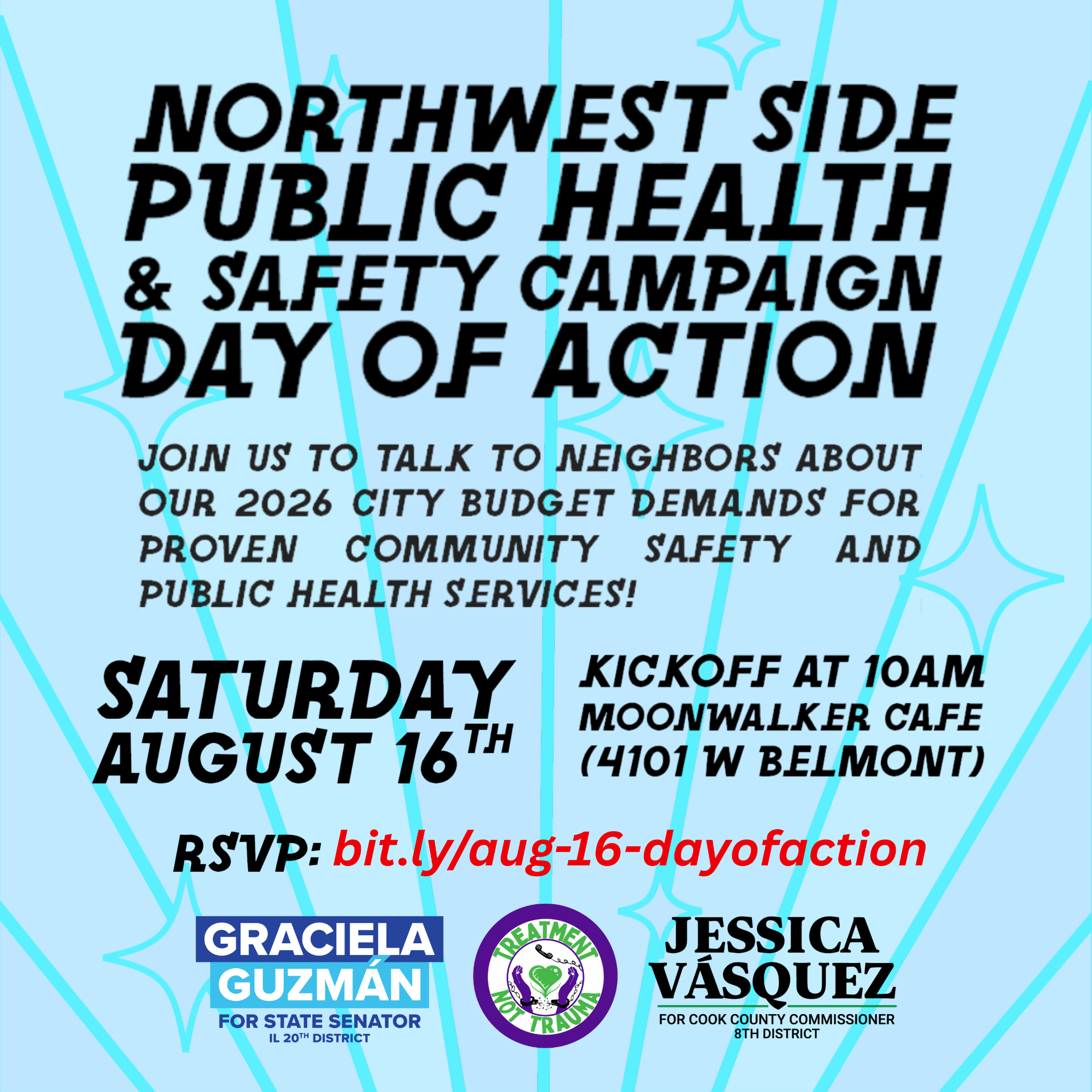
The next canvass is Saturday, August 16. You can sign up for more information here!
Contact your Alder
There are also scripts ready to guide you in calling and/or emailing your alder to push them to fully fund CARE!